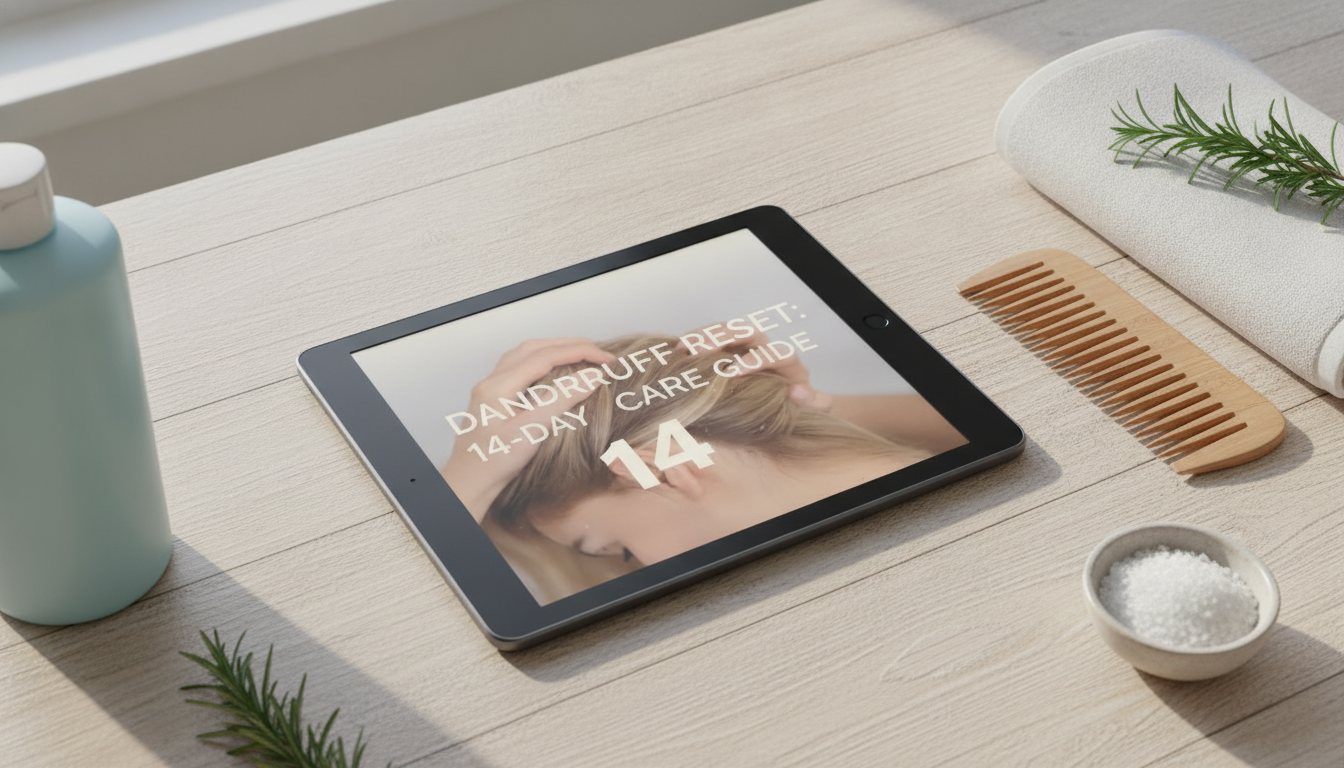
Flakes, itch, and an irritated scalp can come from several causes—from common dandruff to seborrheic dermatitis, product buildup, or sensitivity. A clear plan helps: identify likely triggers, choose the right active ingredients, use them correctly, and support the scalp barrier so results last.
Dandruff usually shows up as white-to-gray flakes and itch. It’s often linked to scalp inflammation plus an overgrowth of yeast (commonly Malassezia) interacting with scalp oils and faster skin turnover. The good news: many cases respond well to the right shampoo routine—when it’s used correctly and consistently.
Seborrheic dermatitis is closely related, but tends to look and feel more inflamed. It can spread beyond the scalp to the eyebrows, sides of the nose, and behind the ears. If you’re seeing greasy scale in more than one of these areas, a maintenance plan (not a one-time fix) typically works better.
A dry scalp can mimic dandruff, but the flakes are often finer and the scalp may feel tight rather than oily. This matters because strong anti-fungal shampoos can feel harsh if the root issue is dryness or sensitivity.
Other conditions can also cause flaking, including psoriasis and eczema. If you have thick, stubborn scale; bleeding; severe redness; or symptoms that keep returning despite careful routine changes, it’s worth getting a clinician’s input.
Choosing an anti-dandruff product is less about “the strongest shampoo” and more about matching the active ingredient to what your scalp is doing (oily vs. dry, light flaking vs. thick scale, mild itch vs. inflamed patches). Reliable references include the American Academy of Dermatology Association, the Mayo Clinic, and the NHS.
| Active | Best for | How often to start | Notes |
|---|---|---|---|
| Ketoconazole | Stubborn flakes, itch with oily scalp | 2x/week | Leave on scalp 3–5 minutes; alternate with gentle shampoo |
| Selenium sulfide | Greasy flakes, seborrheic dermatitis tendencies | 2–3x/week | Can discolor some hair if not rinsed well; avoid on broken skin |
| Zinc pyrithione (where available) | Mild–moderate dandruff maintenance | 2–3x/week | Often well tolerated; rotate if plateau occurs |
| Salicylic acid | Scale/buildup that blocks other treatments | 1–3x/week | Moisturize lengths; reduce frequency if dryness increases |
| Coal tar | Thick scale and inflammation | 1–2x/week | Follow label; can increase sun sensitivity on exposed areas |
For a quick-reference routine you can keep on hand during shopping and routine changes, see Guide to Tackling Dandruff | eBook for How to Address Dandruff Effectively | Digital Download for Scalp Care, Hair Health & Anti-Flake Solutions.
To keep your essentials organized (especially if you’re rotating products during a reset), the Black Floral Cosmetic Bag is a handy option for storing minis, scalp tools, and travel-sized shampoos.
Many people notice improvement in 1–2 weeks when the shampoo is used consistently and left on the scalp for a full 3–5 minutes. More stubborn flakes may take 3–4 weeks, and some routines work best by rotating actives.
Not always. A common starting point is 2–3 times per week for a medicated shampoo, using a gentle shampoo on other wash days; then adjust if dryness increases or flakes persist.
No. Dandruff often involves oil and inflammation, while dry scalp tends to feel tight and produces finer flakes. Using strong anti-fungal or keratolytic products on a truly dry, sensitive scalp can worsen irritation.









Leave a comment