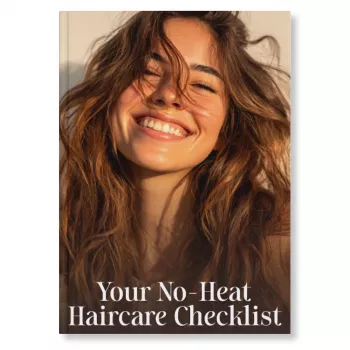
Heat-free styling works best when wash day, moisture, protection, and set time are planned—especially for textured and natural hair. A simple checklist keeps routines consistent, reduces breakage risk, and makes no-heat hairstyles easier to repeat day after day.
No-heat haircare is less about “doing nothing” and more about choosing low-damage methods that let your hair set and dry with control. Think braids, twists, rollers, wraps, banding, stretching, and air-drying techniques that reduce friction and tension.
Some routines still allow occasional low-heat exceptions (like a diffuser on cool/low) when used sparingly with good technique and a protectant. The bigger win is consistency: moisture balance, gentle detangling, and protective nighttime habits.
Results also depend on your hair’s porosity, density, and lifestyle (gym schedule, commute, humidity). Use the checklist as a framework—then adjust the steps that affect your softness, frizz level, and dry time the most.
A checklist reduces decision fatigue on wash day. Instead of improvising every week, you repeat what’s already proven to work for your hair and troubleshoot with intention.
Cleanse as needed (gentle shampoo or co-wash), then condition and detangle with plenty of slip to reduce mechanical damage. If buildup is making hair dull or slow to dry, clarifying can be the difference between a crisp set and a puffy one.
Pick a style based on the finish you want (stretch, curl definition, volume) and how long your hair can dry undisturbed. Smaller sections generally dry faster and hold longer, but take more time to install—so match section size to your schedule.
Use low-friction tools like a microfiber towel (or cotton tee) and satin/silk at night. Avoid tight elastics and repeated pulling at the hairline—edges usually show stress first.
Preserve the style with nighttime protection, then refresh with light hydration and targeted smoothing. Re-wetting everything often leads to uneven texture and extra manipulation; instead, fix only what needs it.
Wash day doesn’t have to be long—it just needs to be consistent. Keep the steps predictable, and let your notes guide what to tweak.
| Step | Do this | Notes to track |
|---|---|---|
| Cleanse | Focus on scalp; rinse thoroughly | Buildup? Itch? Product residue? |
| Condition | Prioritize slip + moisture balance | Softness after rinse (1–5) |
| Detangle | Sectioned, gentle, ends-to-roots | Shedding amount; snag points |
| Set prep | Apply leave-in + styler in layers | Hold level; frizz control |
| Dry | Fully dry before sleep or wrapping | Dry time; shrinkage level |
| Style | Best for | Dry time needs | Typical hold |
|---|---|---|---|
| Twist-out | Soft definition + volume | Medium–long | 2–5 days |
| Braid-out | Stretch + defined wave | Medium–long | 3–6 days |
| Flexi/perm rods | Curl pattern + bounce | Long | 3–7 days |
| Banding/threading | Stretch + tangling control | Medium | 1–3 days (as a base) |
| Claw-clip updo | Fast styling + low tension | Low | Same-day to 2 days |
For a repeatable routine you can use every wash cycle, the No-Heat Haircare Checklist (digital download) keeps your steps clear across wash day, styling, and maintenance—especially helpful when you’re reducing heat to improve softness and breakage control.
Pair it with simple tools that make no-heat styling easier to manage day to day. A dedicated storage pouch like the Black Floral Cosmetic Bag for hair tools and accessories helps keep sectioning clips, ties, rods, and a small sprayer together so you’re not hunting for essentials mid-routine.
For more hair-and-scalp fundamentals, the American Academy of Dermatology Association shares practical hair care basics, and the Cleveland Clinic outlines common breakage causes and prevention tips that pair well with heat-minimizing routines.
Frizz control and definition often improve within 1–2 wash cycles when sets are fully dry and handled gently. Breakage reduction and better length retention usually take several weeks of consistent moisture, low tension, and protective nighttime habits.
Twist-outs or braids on damp-not-wet hair are reliable for overnight sets, especially with smaller sections for better hold. Protect with a scarf or bonnet, and make sure hair is fully dry by morning to minimize frizz and prevent odor.
Yes—fine or low porosity hair often does best with lighter product layers, smaller sections, and more patience with dry time. Periodic clarifying can help reduce buildup, and conditioning may work better with warm water rinses or a steamy bathroom rather than direct heat tools.








Leave a comment